
Published: 2026-07-03 11:53:11Source: CollectorViews:
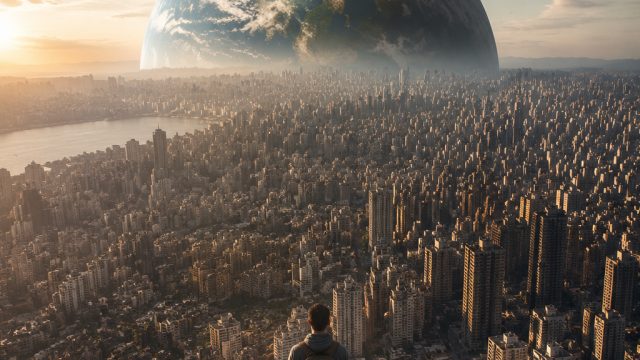
The question of how many people our planet can support has become increasingly important in recent discussions about sustainability and resource management. As global populations continue to rise, understanding the limits of our Earth is crucial for planning a sustainable future. In this article, we delve into the various factors that determine Earth's population capacity and the implications for our future generations.
As of 2023, Earth's population has surpassed 8 billion, prompting experts to rethink the balance between population growth and resource availability. Several fundamental principles govern how much of the planet's resources can be allocated per person. Here are some essential concepts:
Several interlinked elements contribute to determining the Earth's capacity for supporting human life. Here, we explore some of the most critical factors:
Food production remains one of the foremost limitations on population growth. Sustainable farming practices can enhance productivity, but land and water resources are finite. Innovations in vertical farming and genetically modified organisms (GMOs) are revolutionizing how we approach food production.
Access to clean water is another vital component. Over two billion people currently live in water-stressed areas. Initiatives focusing on water conservation and efficient usage are essential in addressing this challenge.
The energy landscape plays a significant role in sustaining large populations. The shift toward renewable energy sources is crucial for supporting continued growth without exhausting fossil fuels and increasing greenhouse gas emissions.
Urbanization trends reveal that more people are moving to cities, which can lead to both challenges and opportunities. Urban areas can provide better access to services, but they also face unique issues, such as overcrowding and pollution. Here are some urbanization impacts on population capacity:
As we look ahead, the challenge lies in balancing population growth with the sustainable management of resources. Here are some strategies experts recommend:
Encouraging sustainable consumption and production methods can help minimize waste and ensure equitable resource distribution. Education on sustainability should be integrated into curricula worldwide.
Governments should adopt policies promoting family planning, education, and women's empowerment. Empowering women in particular can lead to lower birth rates and healthier family planning.
Addressing overpopulation is a global issue requiring cooperation among nations. Sharing resources, technology, and strategies can help create a more sustainable future for everyone.
The question of how many people the Earth can support is not merely a numerical one; it involves complex interactions between societal behaviors, technological advancements, and environmental conditions. As we continue to navigate these challenges, it is imperative to prioritize sustainable practices to ensure that future generations can thrive on this planet. The conversation about our population capacity is more critical now than ever, and each of us has a role to play in shaping a sustainable future.
Previous:Explore Chinatown's Unique Fil

Qutoutiao | free slo
2.90 MB | Make money by reading

Bubble headlines | z
6.86MB | Make money by reading

Qilin.com | aha slot
1.59 MB | Make money by reading

Douyin speed version
13.1 MB | Make money by reading

Easter egg video | k
8.86 MB | Make money by reading

Shell turn | ratu111
16.25 MB | Make money by reading

Ant Highlights | sit
7.68MB | Make money by reading

lightning box | raja
8.03MB | Make money by reading

2026-07-03
PvX Partners Raises
The Rise of Mobile G
The Phenomenon of Mo
Unlocking Productivi
Knicks Extend Deal w
Mobile Game Developm
Gaming on the Go: Th
Exploring Augmented
Unveiling the Best N
Bubble headlines | z
Make money by readingQilin.com | aha slot
Make money by readingDouyin speed version
Make money by readingEaster egg video | k
Make money by readingShell turn | ratu111
Make money by readingAnt Highlights | sit
Make money by readinglightning box | raja
Make money by readingKandian Express | ka
Make money by readingEnjoy information an
Make money by reading